
The short version
A useful starting point
Consider Publer for a reusable post library with deliberate repeat rules. Give repeated offers a review date and remove posts whose information has expired.
A good fit if…
A reusable post library with deliberate repeat rules.
Look elsewhere if…
Most posts contain deadlines or details that change too often to repeat safely without frequent intervention.
Publer documents manual scheduling, automatic scheduling, recycling and recurring posts. Its help guide says automatic scheduling and recycling require a posting schedule to be set up first. This makes it a candidate for a reusable post library with deliberate repeat rules. The sections below connect those features with a task you can try using your own material.
What the product documentation confirms
Check the difference between your intended recurring schedule and recycling behaviour. Give repeated offers a review date and remove posts whose information has expired. It may not be the right purchase if most posts contain deadlines or details that change too often to repeat safely without frequent intervention.
Separate a lasting idea from its temporary details
An evergreen topic can contain short-lived information. A useful explanation of your service might still mention an old booking link, a former service area or an offer that has ended. Before reusing anything, distinguish the underlying advice from the details that make the post actionable. Those details often deserve more attention than the headline or image because they determine what happens when someone responds.
Example: a freelance designer wants to reuse a post explaining what clients should prepare before requesting a quote. The preparation advice may remain useful for months. A sentence promising a particular turnaround time may not. A sensible approach is to keep the lasting advice in the reusable post and inspect any claims about availability, response times and actions before another publication. This is a proposed workflow, not a reported Publer test.
Choose the publishing pattern after checking the content
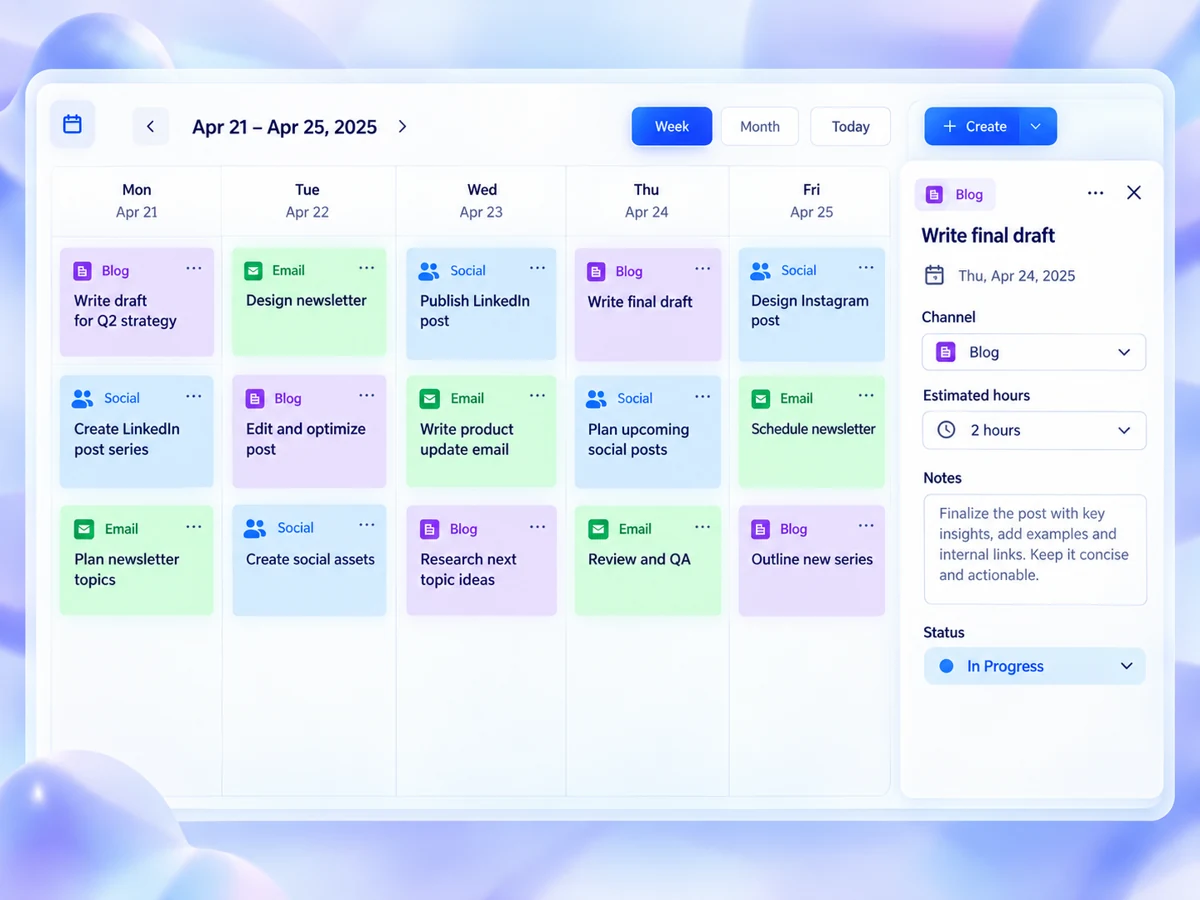
Calendar planning is a sensible starting point when each publication needs a deliberate context check. Recycling and recurring posts are relevant options when the same material deserves another outing. However, the published product details do not explain their detailed differences, so do not assume the two methods are interchangeable. Check how each handles timing, repetition and stopping before committing a collection of posts.
The trade-off is between less repeated scheduling work and more responsibility for maintaining the source content. A recurring explanation of a stable process may be manageable. A post tied to changing availability needs closer supervision. Even accurate advice can become repetitive for readers, so include editorial variety in your decision rather than treating continued accuracy as the only requirement.
Give every reusable post a maintenance record
Keep a simple record outside the scheduler if necessary. For each candidate post, note its purpose, destination link, change-sensitive claims, next review date and reason to stop repeating it. This is a recommended editorial practice, not a claim about Publer’s features. For a one-person business, a short document can make the maintenance obligation visible without introducing an elaborate approval process.
Make the review interval reflect the information, not just the publishing rhythm. Stable educational advice and a frequently changing service announcement should not receive identical treatment. Review sooner when the underlying offer changes. If you cannot confidently identify who will check a post and when, leaving it out of an ongoing schedule is a reasonable choice.
Run a small trial before building a library
Start with three posts: one stable educational tip, one service explanation and one item with a defined expiry condition. Inspect the available scheduling controls and confirm the intended timing before enabling repetition. Establish a bounded trial only after confirming how its end conditions work. Keep the original copy separately so you can compare your intended content with what is scheduled.
During the trial, assess effort rather than imagined marketing gains. How long does setup take? Can you understand the next planned publication? What work is involved when a detail changes? Verify the editing and stopping workflow directly; the supplied material does not establish those mechanics. Continue only if the scheduling work saved outweighs the checking work added. A smaller maintained collection is more useful than a large unattended one.
Strengths
- A posting schedule plus recurring or recycled content.
- Publer documents manual scheduling, automatic scheduling, recycling and recurring posts.
Limitations
- Give repeated offers a review date and remove posts whose information has expired.
- Check the difference between your intended recurring schedule and recycling behaviour.