
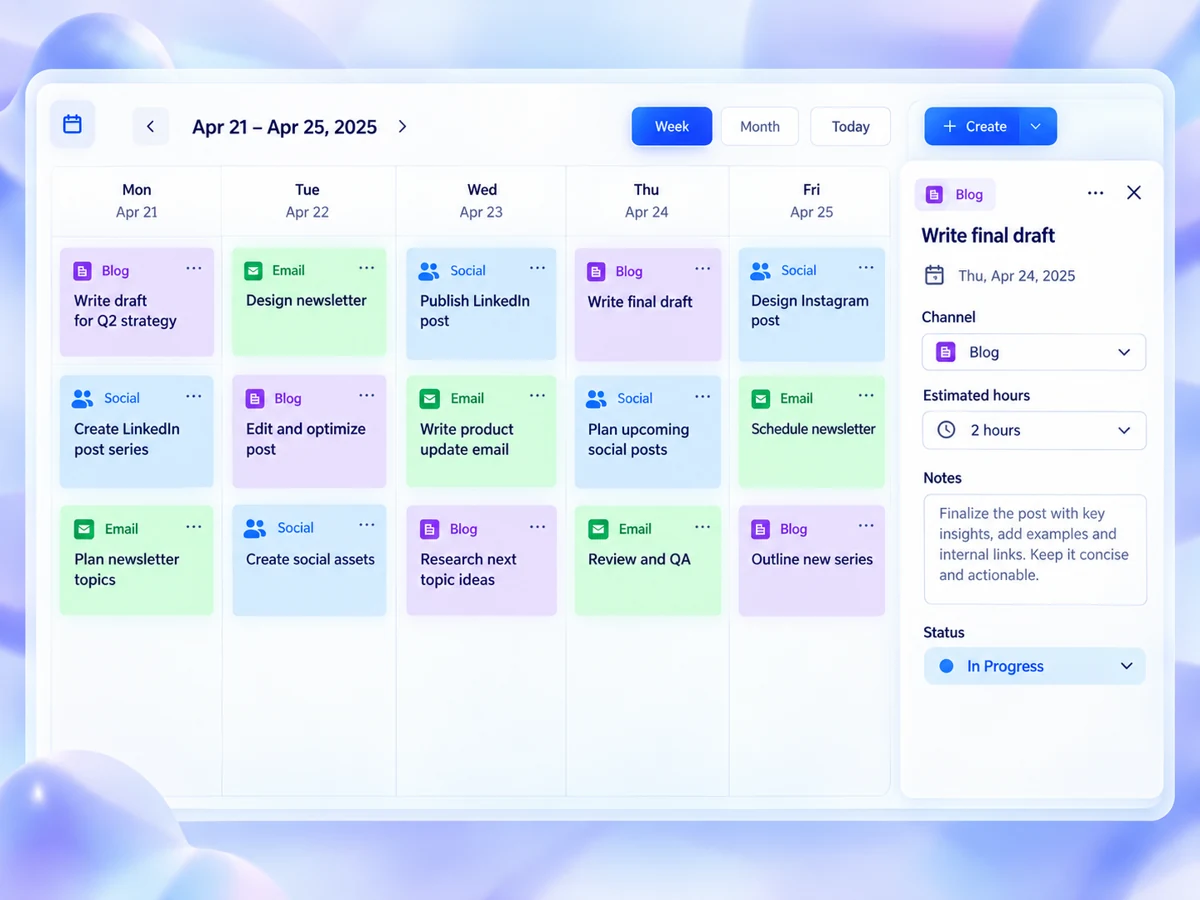

Plan your weekly marketing block by choosing one useful task, then reserving enough time to finish a small version of it. Start with the capacity you can reasonably protect, not a list of channels you feel obliged to maintain. A workable block has a specific output, a stopping point and a smaller fallback for weeks when paid work or business operations take priority.
Choose the job before choosing the time slot
“Do marketing” is too vague for a calendar entry. It leaves you deciding what matters after the session has already started. Instead, name a task connected to a current business need: explain an offer, answer a common buying question or prepare an update for existing subscribers. Pick one primary output. Extra formats can wait.
Example: an independent designer wants prospective clients to understand what happens during a website audit. The weekly task could be to draft and publish a short explanation covering who the audit suits, what information clients need to provide and how to enquire. That is a more useful brief than “post more often”, because it identifies both the reader’s question and the deliverable.
Find capacity in an ordinary week
Look at the next two weeks of actual commitments before adding a recurring appointment. Account for delivery deadlines, administration and preparation—not just meetings. Choose a slot when you usually have enough attention for the task. Writing an explanation needs different conditions from checking links or scheduling an approved update.
Start with a block you can protect without borrowing from essential work. Example: if an hour is realistic but an afternoon is not, plan for an hour. Leave some room between marketing and the next commitment so an unfinished sentence does not make you late. A shorter reliable appointment is a better starting point than a generous slot you repeatedly cancel.
Divide the block into preparation, production and checks
Give the session a simple internal structure. The purpose is not to manage every minute; it is to prevent research, rewriting or formatting from consuming all the available time. Put the outline, supporting material and publishing destination in the calendar note so you do not begin by searching for them.
- First 10 minutes: confirm the reader’s question, choose the main point and gather the information already available.
- Next 35 minutes: create one draft or update, keeping optional ideas in a separate note.
- Final 15 minutes: check accuracy, links and the next action; publish if ready, or record the exact remaining step.
Those timings are an example, not a productivity standard. If the task needs approval, original research or new photography, an hour may only produce a review-ready draft. Define “finished” accordingly. Do not compress essential checks just to claim the session produced a published piece.
Set a fallback before the week gets busy
Choose a reduced version of the task while you still have time to think. For the designer’s audit explanation, the fallback might be drafting the three client questions rather than publishing the whole piece. It should move the same work forward, not create an unrelated obligation.
Decide what happens if the block disappears entirely. Move it once to a specific available slot, reduce the scope or deliberately skip it. Avoid automatically stacking missed sessions into the following week: that turns a capacity problem into a backlog. Time-sensitive customer communication may need separate attention; a weekly production block cannot cover every response or update.
Trial the routine for two weeks
Treat the first two sessions as a scheduling trial, not a test of whether marketing works. After each block, leave a brief note about what was completed, what interrupted you and what remains. Before repeating the appointment, check four things:
- Was the slot genuinely available, or did it conflict with predictable business demands?
- Were the necessary facts, files and permissions ready before production began?
- Did the output reach its defined stopping point without dropping essential checks?
- Is the next task small enough for the same block, or does it need a separate preparation step?
Change one variable next: the time slot, task size or preparation. Keeping the others steady makes the adjustment easier to judge. One weekly block limits how much you can produce, but it also makes the trade-off visible. Start here: book one realistic session and give it a deliverable you can recognise as finished.