
The short version
A useful starting point
Consider Metricool for a routine that combines publishing with performance review. Choose a small set of metrics and keep the reporting period consistent.
A good fit if…
A routine that combines publishing with performance review.
Look elsewhere if…
You only need a small queue and would not use the reporting or inbox workflow.
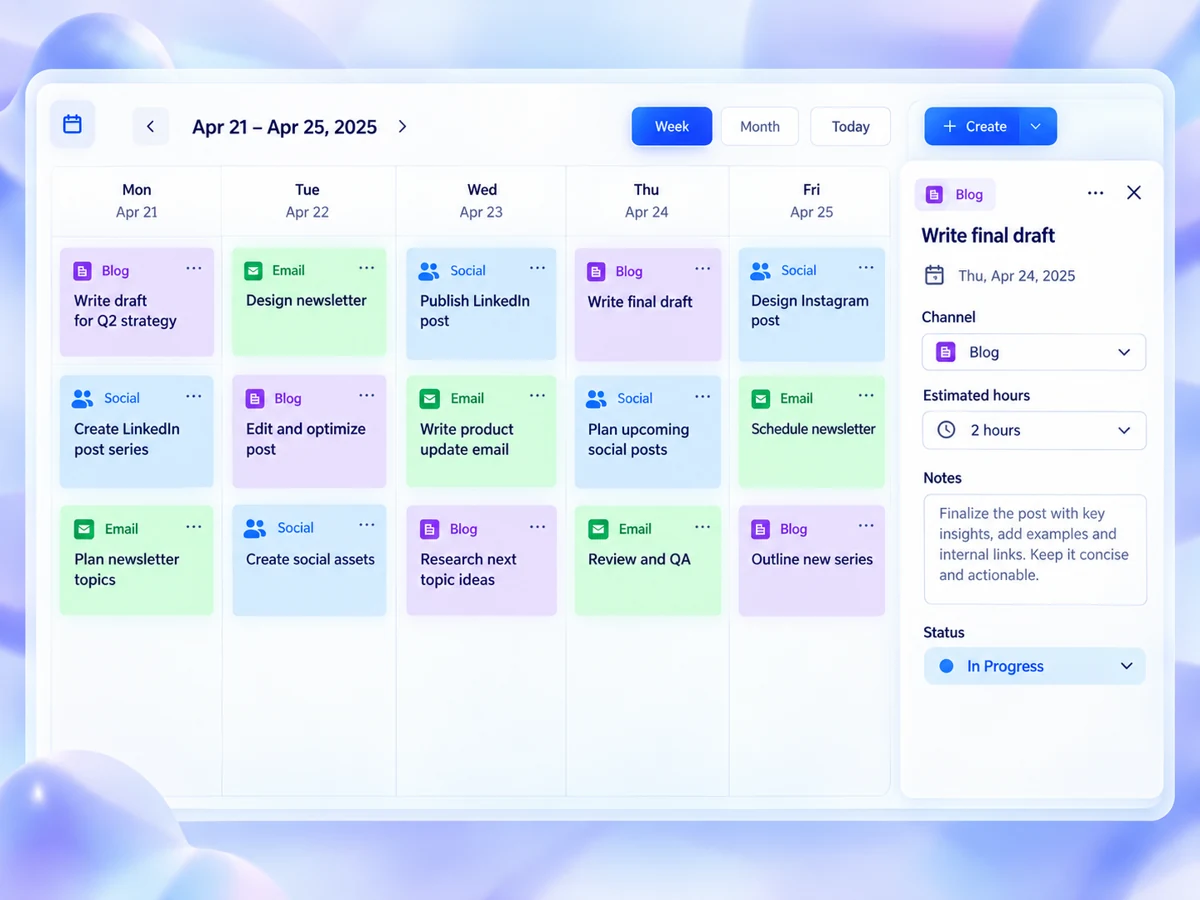
Metricool combines a social planner and publishing calendar with analytics, reporting and an inbox. The planner supports scheduling and automated content lists; reporting capabilities should be checked against your accounts and plan. This makes it a candidate for a routine that combines publishing with performance review. The sections below connect those features with a task you can try using your own material.
What the product documentation confirms
Confirm support for each network, account type and collaboration role you need. Choose a small set of metrics and keep the reporting period consistent. It may not be the right purchase if you only need a small queue and would not use the reporting or inbox workflow.
Start with a campaign small enough to review properly
Example: a solo consultant is promoting one upcoming workshop through a short sequence of social posts. The immediate job is to prepare the sequence, schedule suitable posts, keep track of replies and review what happened before planning the next workshop. This is a more useful evaluation task than filling a calendar with unrelated content, because every item serves the same purpose and the review has a defined endpoint.
Before setting anything up, write down the campaign’s purpose and the decision the review should inform. That decision might be whether to explain the workshop differently or change the order of future posts. Keep a simple record of the intended audience, each post’s role and its planned timing. This record is your own evaluation aid; do not assume Metricool provides dedicated fields or campaign grouping for it.
Judge setup by the work it removes
Account organisation matters even for a small business. Decide which accounts belong together before configuring Brands, and confirm how the available plan accommodates that structure. Then check support for the platforms and publishing tasks you actually use. A broad feature description is not enough to establish that a particular post format, account type or approval arrangement will work.
The trade-off is initial organisation versus recurring coordination. A combined tool may be worthwhile if you repeatedly reconstruct your schedule when reviewing activity. It may offer less benefit if your campaign is tiny and your existing process already keeps planning and review close together. During evaluation, note any duplicate entry or manual handoff that remains. The useful question is whether the new routine is easier to maintain, not whether it looks more comprehensive.
Assess the review output, not just the feature list
When reviewing the example workshop campaign, put your original schedule beside the analytics and reporting available to you. Check whether you can identify the relevant posts and understand the measures presented. Do not assume a report will connect social activity to workshop bookings, or that a change in one measure explains why people acted. Keep observations separate from explanations: a post’s recorded activity and your theory about its message are different things.
A useful review should end with a modest next action. For example, you might decide to make the workshop’s intended audience more focused in the next campaign. That is a planning hypothesis, not a proven improvement. If someone else needs the report, assess whether they can understand it without a lengthy explanation. Verify the report contents and available sharing or export options rather than assuming a particular delivery format.
Use a short evaluation with a defined stopping point
If a suitable trial or demonstration is available, follow one short campaign from setup through review. Test a representative publishing task, inspect the available analytics and reporting, and assess the inbox against the conversations you need to handle. If another person participates, verify their collaboration access. Record unresolved questions as you go. At the end, decide whether the combined workflow removes enough recurring work to justify adopting and maintaining it; do not let unused features decide for you.
Strengths
- Schedule content and review reporting in the same platform.
- Metricool combines a social planner and publishing calendar with analytics, reporting and an inbox.
Limitations
- Choose a small set of metrics and keep the reporting period consistent.
- Confirm support for each network, account type and collaboration role you need.